Why Big Tech Is Abandoning Open Source (And Why We Are Doubling Down)
Last week, Alibaba's Qwen team lost its technical lead and two senior researchers just 24 hours after shipping their latest model. The departure triggered immediate industry speculation. People are asking if the flagship Qwen models are going closed.
When you combine those rumors with Google and OpenAI strictly guarding their own walled gardens, a very specific narrative starts to form for investors. If the trillion-dollar tech giants are retreating from open-weights AI, it must mean the economics do not work.
I want to address that assumption directly.
The tech giants are not closing their models because open source is a bad business. They are closing them because they are trying to build the most lucrative software monopoly in human history. They want to put a toll booth on every pixel and every workflow.
At Lightricks, we are taking the exact opposite approach. We are accelerating our open-weights strategy. Here is why we are betting the company on it.
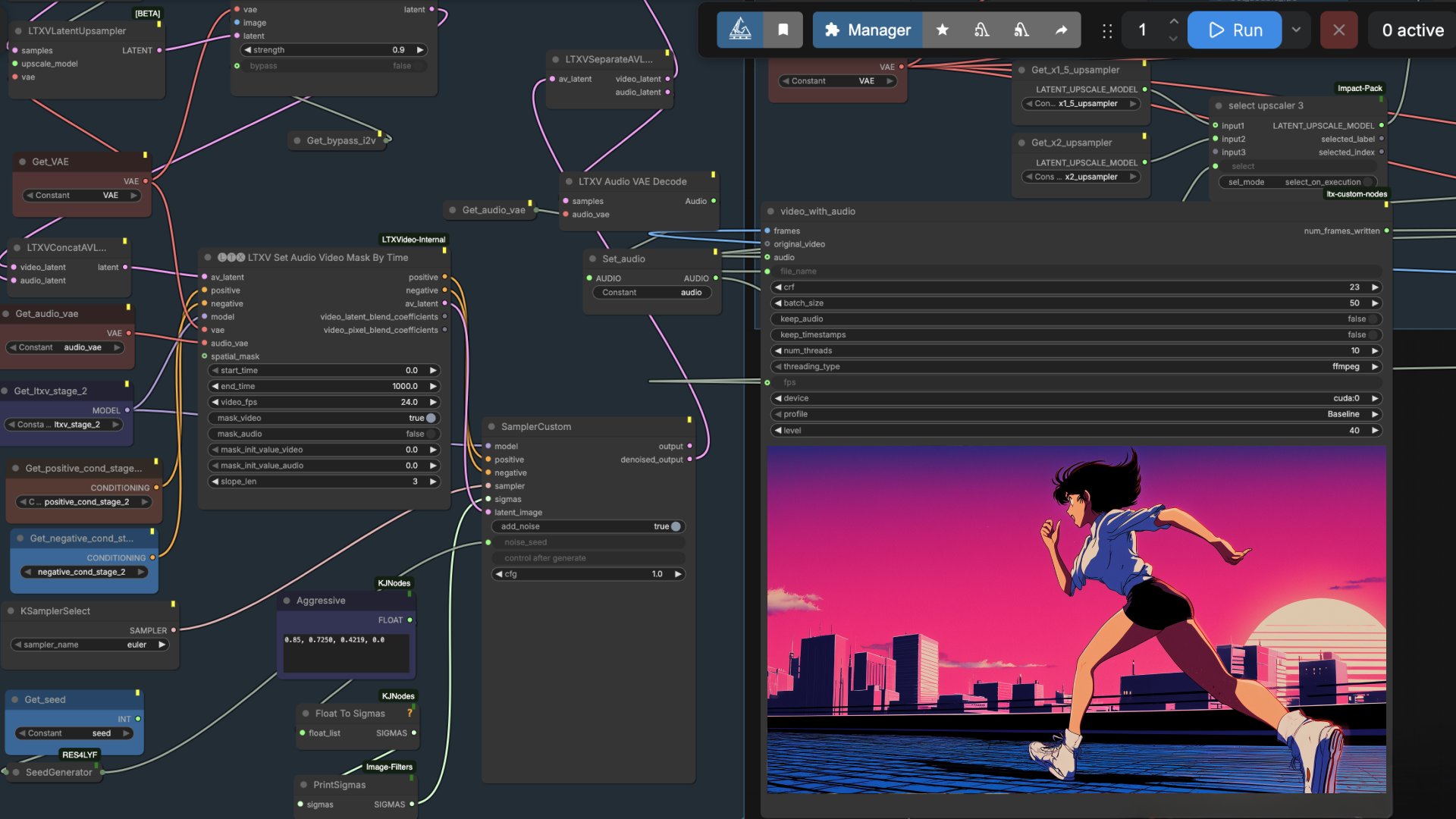
Running LTX 2.3 in ComfyUI
The Sora Illusion and the Weta Digital Reality
When people see a demo from a closed model like Sora, the immediate reaction is usually about the visual fidelity. If a closed API generates a prettier five-second clip today, why should a creator care about an open-weights model?
That question fundamentally misunderstands how professional creative work actually happens.
Professional studios do not need a slot machine that spits out a random beautiful video. They need a pipeline.
Think about how Weta Digital approached the visual effects for the movie Avatar. They didn't just buy off-the-shelf software and hit render. They built entirely new, proprietary rendering pipelines from the ground up. They required deep node access and complete control over how the lighting physics integrated with their existing tools.
You cannot build an Avatar-level production pipeline by pinging a black-box cloud API.
You certainly cannot fine-tune a closed API using a studio's highly confidential pre-production concept art. For serious creative industries, sending unreleased IP to a third-party server is a hard stop. Professionals need on-prem deployment. They need an engine they can rip apart and connect directly to their own proprietary infrastructure.
The media could not be played. Reload
The Economic Case for Open Foundations
This brings us back to the business model.
Building a product on top of someone else's closed API means you are renting your core capability. When the provider decides to raise prices, your margins collapse. When they update the model and change the output style, your entire product breaks. You control nothing.
History has already shown us how this plays out. In the 1990s, closed operating systems tried to own the entire computing stack. That aggressive lock-in created a massive market vacuum for open infrastructure. Red Hat built a multi-billion dollar business simply by providing a reliable, enterprise-grade open foundation with Linux.
That is our exact playbook for generative video.
We give away the foundation because we want it to become the industry standard. Our commercial engine relies on licensing a versatile model that can power enterprise deployments and third-party platforms. The more broadly our technology is adopted by developers building their own tools, the stronger our business becomes.
The media could not be played. Reload
Giving Builders the Engine
This is why we just released LTX-2.3 with open weights.
It is a 20.9-billion-parameter multimodal model handling text, image, audio, and video. It generates production-quality 4K resolution. Because of a highly compressive latent architecture, it runs 100% locally on consumer grade hardware.
But the raw specs are only half the story. The real value is structural control.
When you run LTX-2.3 locally, there are no cloud dependencies and no per-generation fees. Your costs do not scale up just because your usage does. Your creative assets never leave your local drive.
The moat in creative software used to be the user interface. A heavy, complex workspace locked users in for years. Today, AI coding tools allow a small team to rebuild those interfaces in a matter of weeks. The interface is now a commodity.
The defensible asset has shifted upstream to the foundation model itself. Training a production-quality multimodal engine costs tens of millions of dollars and requires years of focused research.
Google and OpenAI want to control your entire pipeline. We put the weights on Hugging Face so you can build your own. The LTX Desktop application is live and free. Download it and run it on your local hardware. See what real structural control actually feels like. If you hit sharp edges, find us in Discord. We built the engine. But the pipeline belongs to you.
Zeev Farbman, Co-founder & CEO, LTX.io and Lightricks