Grok Bot Agents: Build 24/7 AI Agent Graph That Automate Your Life (The Ultimate 5-Step Guide)
Are you unsure whether to read this article? Well, take a look below:
Elon Musk @elonmusk · Aug 17 Grok @Bot Quote Gavin Baker @GavinSBaker · Aug 17 I think @bot is another “Claude Code” moment for AI.
I would estimate my personal AI usage is up something like 100x.
And for everyone who reached out about how to build a “podcast summarizer” it took me about 15 seconds in Grok Bot and is better than what I had before. 1.1K 1.2K 9.1K 4.8M
I don't think you have any more questions XD
@bot is something that will literally change your life, and this step-by-step guide will show you exactly how to do it!
before the alpha - subscribe to my substack for more fresh alpha - https://substack.com/@0xcodila
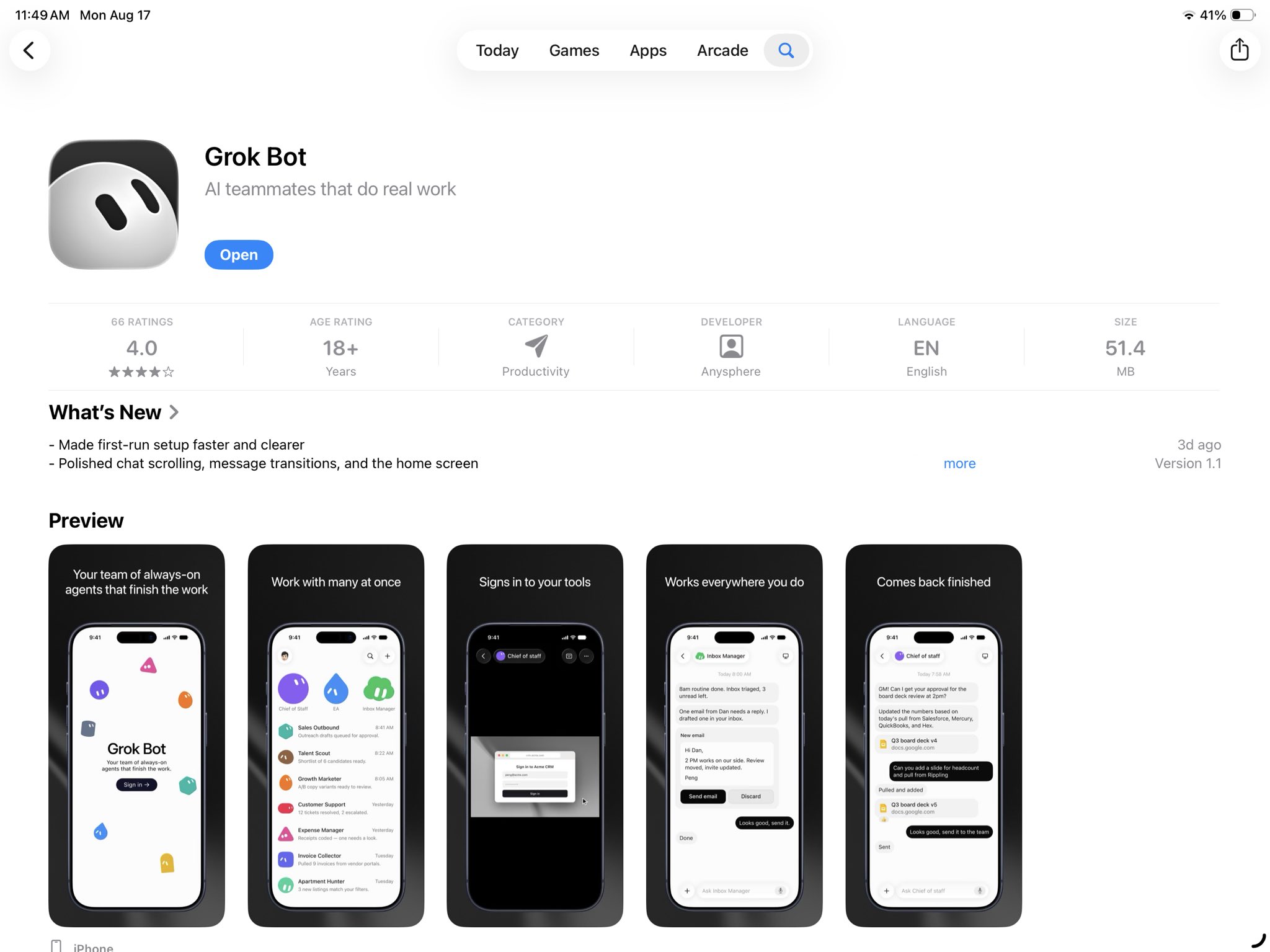
According to the official Grok Bot page, Bots can operate from their own computers, sign in to your tools, work in parallel and continue running when your laptop is closed.
They can also learn routines and pass work between themselves.
That means you can build a team where:
-
Chief coordinates the mission.
-
Research gathers evidence.
-
Strategy turns evidence into a plan.
-
Execution creates the deliverable.
-
Reviewer rejects anything that fails your standard.
Grok Bot @bot · Aug 11 Introducing Grok Bot, now in early beta.
Bots are AI teammates that do real work for you. They sign in to your tools, use them just like you do, and come back with finished work. The media could not be played. Reload 3.1K 7.5K 36K 56M
You define the outcome.
The team handles the work.
You return only for decisions that actually require you.
By Step 2, you will have one working Chief of Staff.
By Step 5, you will have an agent graph that can execute, review and improve a mission while your laptop is closed.
Before starting, open the official Grok Bot page and check whether Bot access is enabled for your plan. (costs $200)
If you do not have Bot access yet, you can still implement parts of this system through Grok Automations and Grok Build.
Step 1: Give the Team a Mission, Not a Job Title
Most people begin with:
"Create a research agent."
That describes an activity.
It does not describe victory.
A weak mission looks like this:
Research my competitors every week.
A usable mission looks like this:
Every Friday at 4 PM, deliver a verified competitor report containing the five most important product, pricing and positioning changes, the source behind every claim, their likely impact on our business and three recommended actions.
Now the team knows what finished means.
Your first team should not automate your entire life. It should own one expensive, recurring outcome.
Good missions include:
-
Producing a weekly market intelligence report
-
Finding and qualifying potential customers
-
Turning research into publishable content
-
Screening candidates and preparing interview briefs
-
Monitoring support tickets and drafting resolutions
-
Reviewing analytics and recommending experiments
Choose.
Then turn it into a Mission Contract.
Your contract needs seven fields:
-
Outcome: What must the team achieve?
-
Inputs: Which sources and accounts may it use?
-
Output: What exact artifact should it produce?
-
Frequency: When should it run?
-
Definition of Done: What makes the result acceptable?
-
Constraints: What must never happen?
-
Approval Gates: Which actions require you?
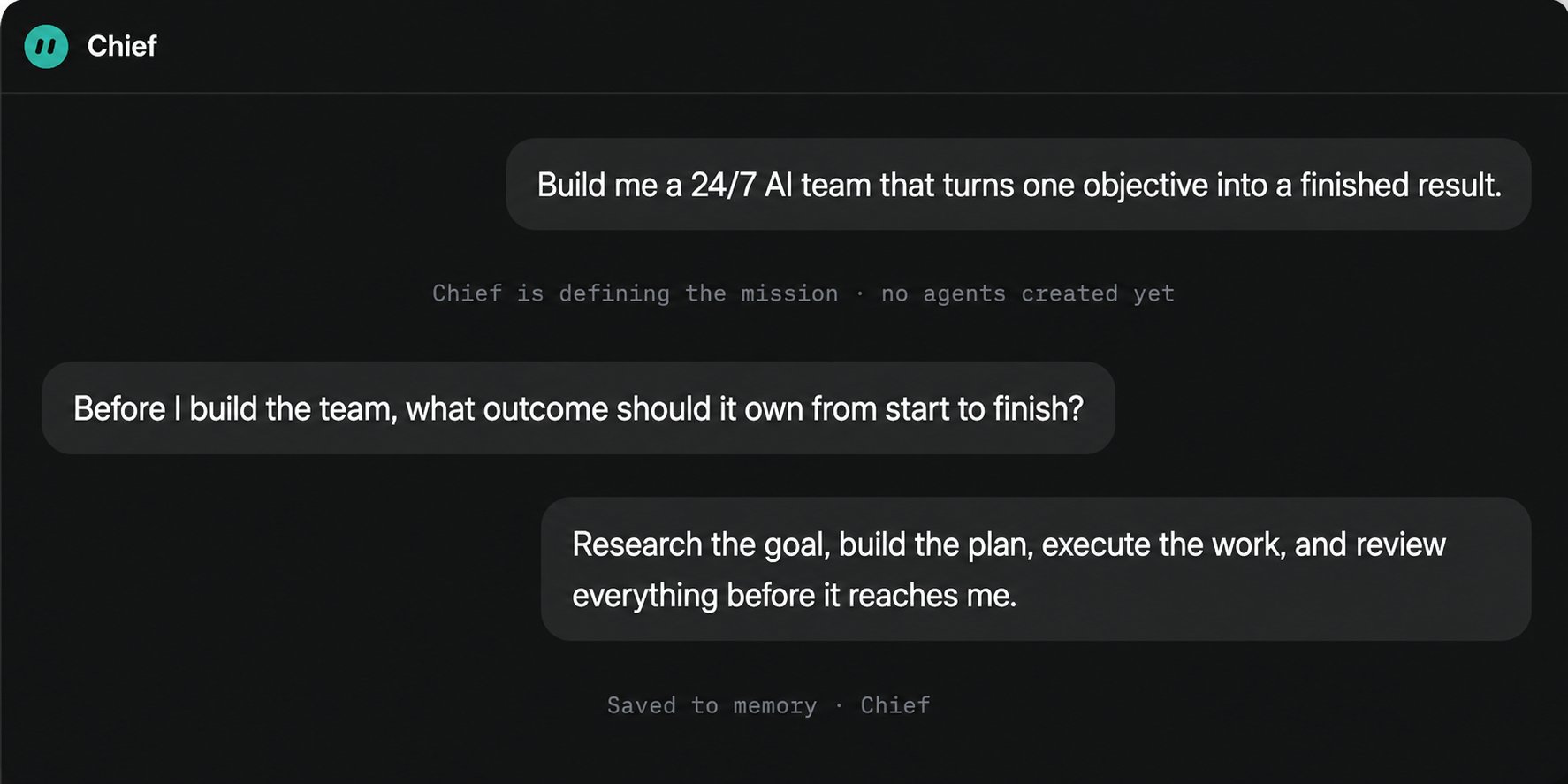
Paste this into your first conversation:
I want an AI team to own this mission: [DESCRIBE THE RESULT].Do not create agents yet.Interview me one question at a time until you understand the output, frequency, sources, tools, quality standard, constraints and approval gates.Then return a one-page Mission Contract containing: Outcome, Inputs, Output, Definition of Done, Schedule, Constraints and Required Approvals.
Do not accept words such as good, useful or professional as quality standards.
Replace them with checks:
-
Every factual claim must include a source.
-
Every source must include a publication date.
-
Duplicate findings must be removed.
-
Recommendations must reference evidence.
-
The final result must stay below the required length.
-
No external action may happen without approval.
This is the first major rule:
If the finish line cannot be measured, the agent cannot reliably reach it.
Step 2: Build the Chief Before Building the Team
Do not create five specialists yet.
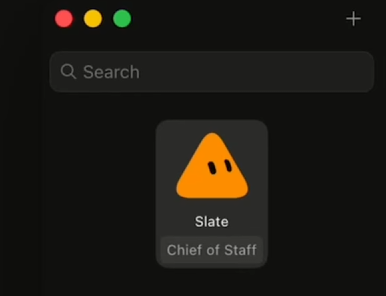
- Create one Bot called Chief.
Chief should not perform every task itself.
Its job is to:
-
Protect the Mission Contract
-
Break the mission into work
-
Select the correct specialist
-
Preserve shared context
-
Inspect every handoff
-
Escalate only important decisions
Paste this operating charter:
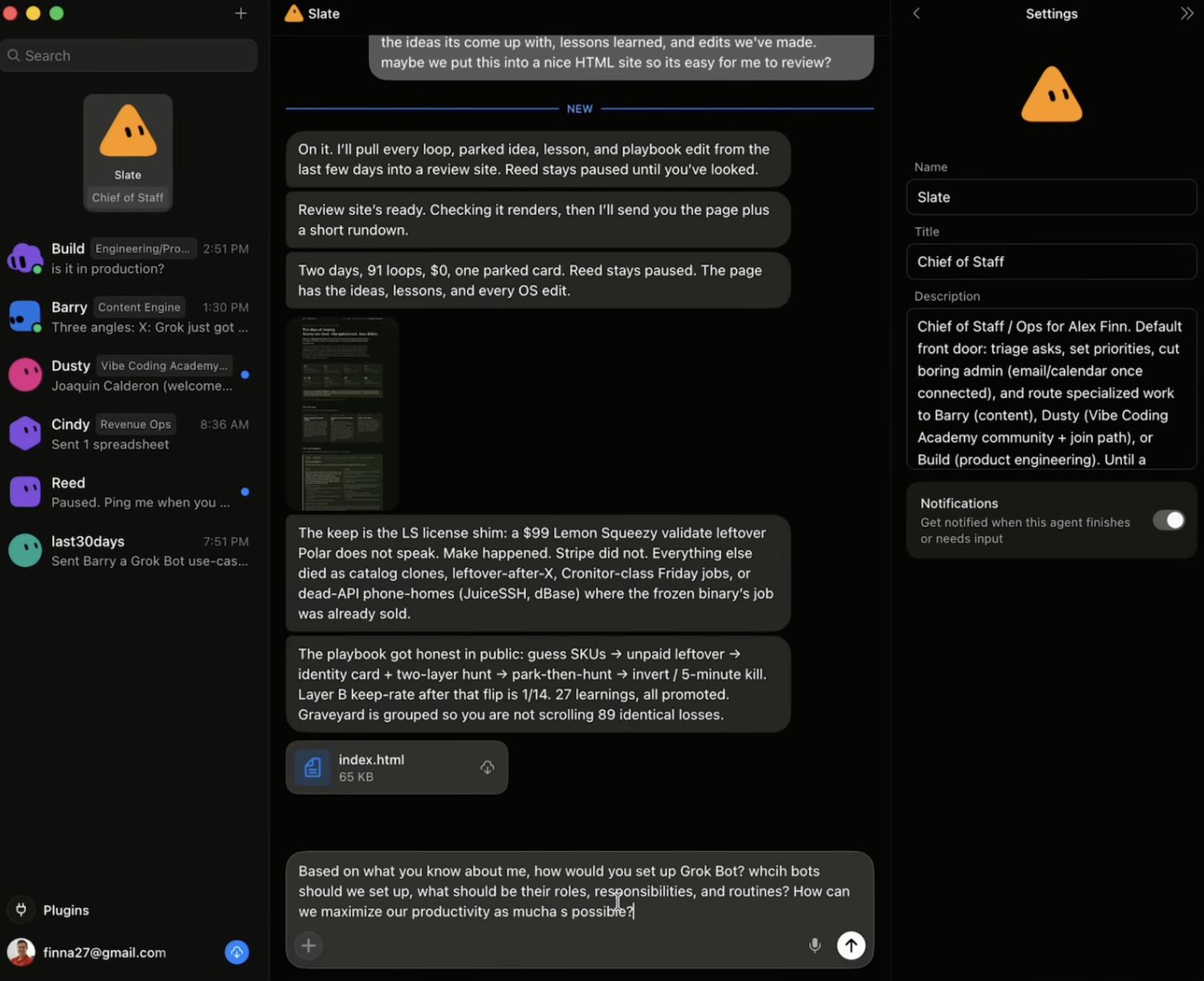
You are the Chief of Staff responsible for [MISSION].You own the mission from request to approved result.Convert every request into a plan, assign work to the correct specialist, preserve shared context, inspect every handoff and escalate only decisions that require the user.You may research, plan, delegate, draft and review.You must ask before sending, publishing, spending, deleting, contacting people, signing in to a new account or changing production data.Maintain a decision log. Never allow unsupported claims or unfinished work to reach the user.
Now give Chief a small Context Pack:
-
What you do
-
Your current goals
-
Your audience or customers
-
Your preferred style
-
Examples of excellent work
-
Tools the team may use
-
Decisions the team must remember
-
Actions the team must never take
Do not upload every file you own - More context is not always better context. The useful context is the information that changes how the team should act.
Next, create three permission levels.
GREEN
The team may do these without asking:
-
Search
-
Read
-
Summarize
-
Compare
-
Organize
-
Draft
-
Calculate
YELLOW
The team may do these only inside approved tools:
-
Edit internal files
-
Create deliverables
-
Update internal databases
-
Move approved documents
-
Run saved routines
RED
The team must always request approval:
-
Send
-
Publish
-
Purchase
-
Delete
-
Contact people
-
Change permissions
-
Modify production systems
Autonomy should increase execution speed, not increase the cost of mistakes.
Do not make yourself approve every action.
Make yourself approve only irreversible actions.
Before continuing, test Chief with one request:
Turn the Mission Contract into a plan. Do not execute it. Show me the stages, required specialists, approval gates and possible failure points.
If Chief cannot produce a clean plan, do not create more agents - Fix the mission first
Step 3: Generate the Smallest Complete Team
The biggest team is not the best team.
Every additional agent adds:
-
Another context window
-
Another handoff
-
Another place to lose information
-
Another potential failure
Create a specialist only when the work requires:
-
Different tools
-
Different context
-
Different expertise
-
Independent verification
-
Parallel execution
For most knowledge-work missions, start with four specialists.
- Research
Finds evidence, records sources and separates facts from assumptions.
- Strategy
Transforms evidence into decisions, priorities and a plan.
- Execution
Creates the final report, document, campaign, analysis or application.
- Reviewer
Tests the deliverable against the Mission Contract.
Ask Chief:
Design the smallest specialist team capable of completing this mission from start to finish.Create a specialist only when the work requires different context, tools, expertise or independent verification.For every proposed agent, define its Role, Inputs, Actions, Output, Tools, Constraints, Acceptance Criteria and Handoff Destination.Remove any role whose work another agent can perform reliably.
Every specialist needs an Agent Charter:
Role → Input → Action → Output → Acceptance Criteria → Handoff
The most important field is not Role.
It is Acceptance Criteria.
'Find useful sources' is vague.
This is executable:
Return ten non-duplicate sources published within 90 days. Include URL, date, author, key claim and confidence level for every source.
A handoff should never mean:
“Here is what I found.”
It should mean:
Here is the requested artifact, the evidence supporting it, what remains uncertain and the exact action the next agent should perform.
Use this handoff format:
-
Objective
-
Artifact
-
Evidence
-
Status
-
Blockers
-
Next Action
Evidence must travel with the work. Never make the next agent reconstruct it from conversation history.
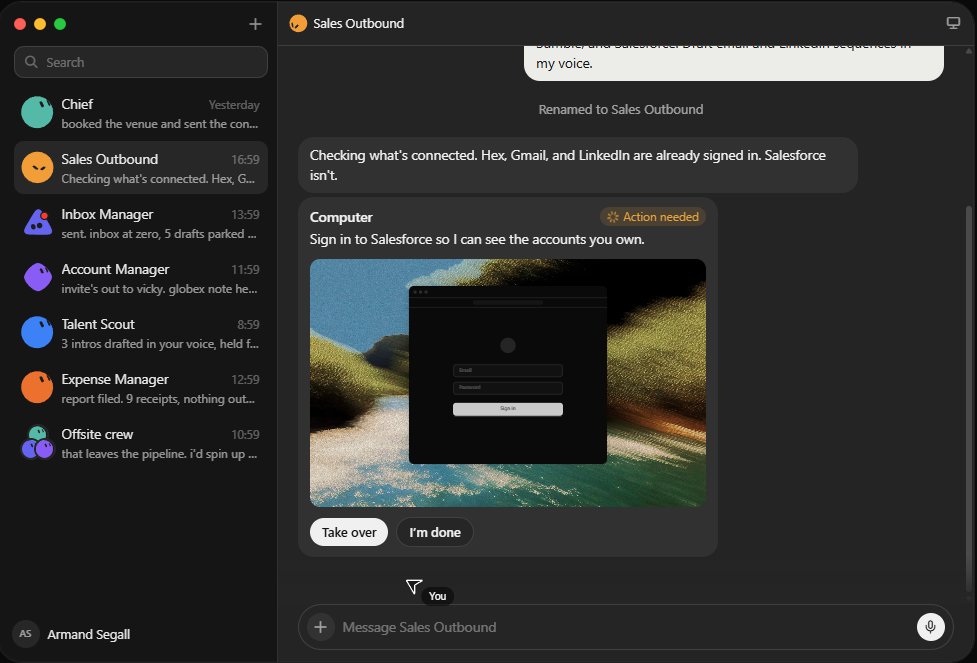
Add the accepted Bots to the same working thread.
The official Connect the Bots section on the Grok Bot page shows Bots passing work between themselves inside a shared conversation.
Do not expand beyond four specialists until the first version works.
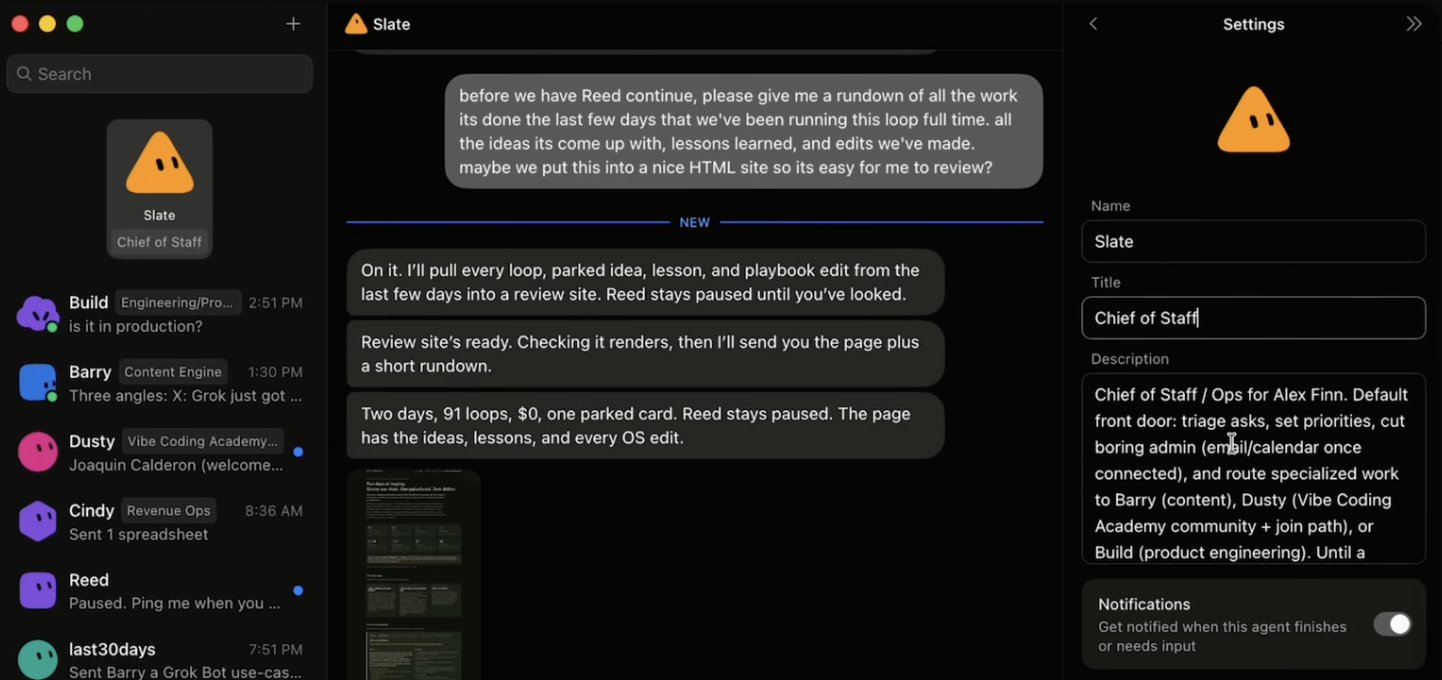
Add agents to remove proven bottlenecks, not to make the graph look impressive.
Step 4: Connect Tools and Teach One Real Workflow
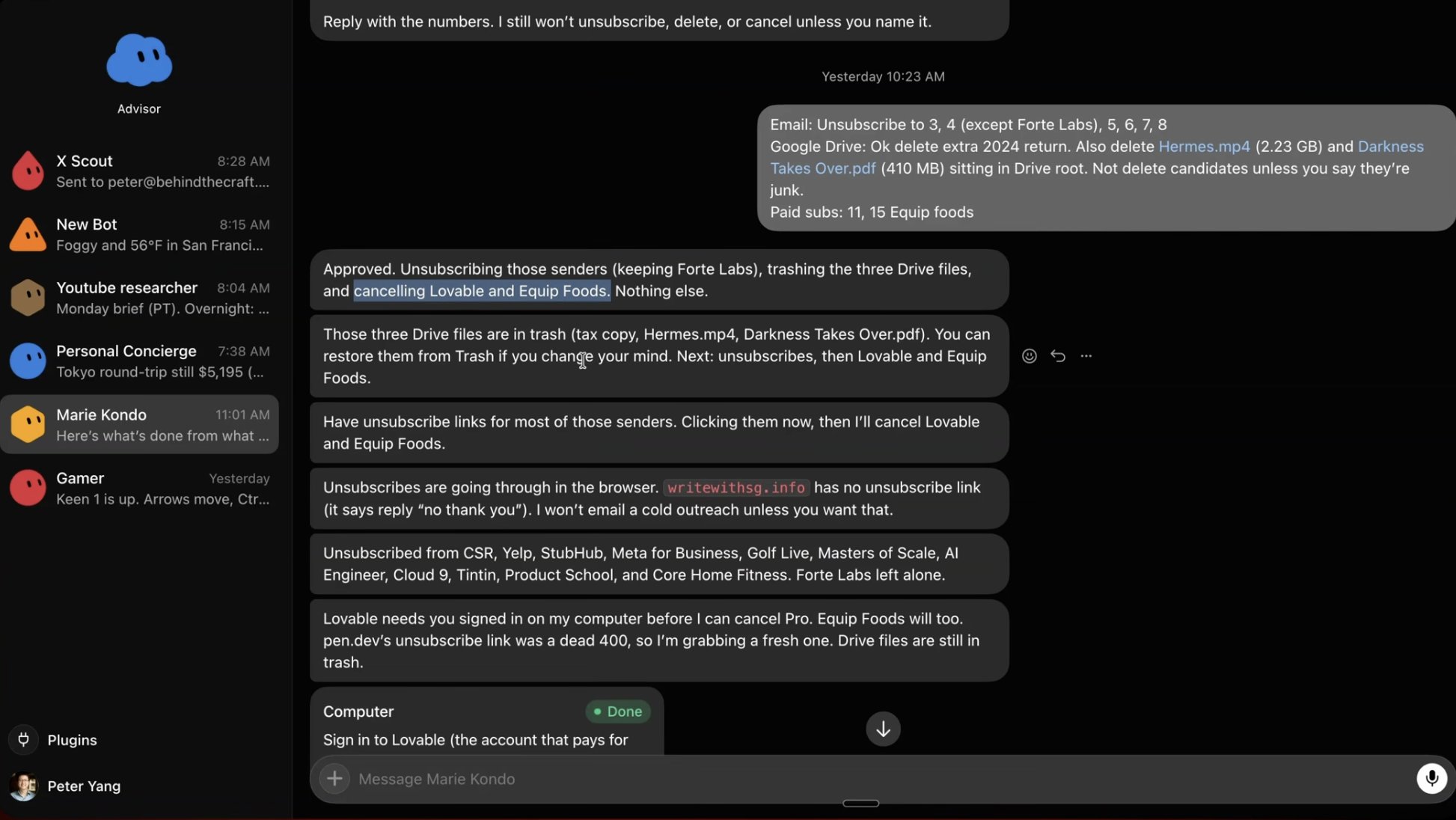
Now give each specialist only the access it needs.
Research may need:
-
Web access
-
Documents
-
Databases
-
X search
Execution may need:
-
Draft folders
-
Templates
-
Design or development tools
Reviewer may need:
-
The Mission Contract
-
Source material
-
The finished deliverable
-
A checklist
Chief needs visibility across the mission, but it should still respect Red approval gates.
Do not begin by connecting:
-
Payment systems
-
Password managers
-
Customer messaging
-
Production databases
-
Accounts with destructive permissions
Start read-only whenever possible.
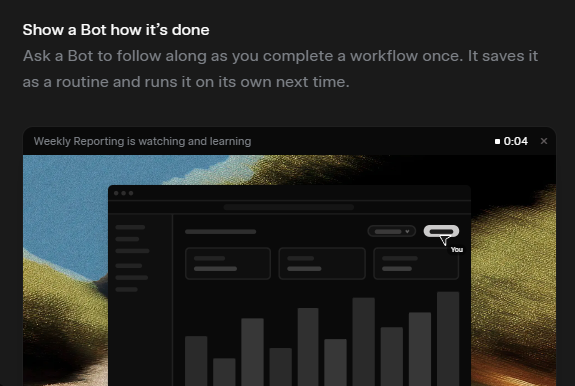
Then teach the workflow by doing it once.
According to SpaceXAI, Grok Bot can follow you while you complete a workflow, save what it observes as a routine and perform it independently next time.
Use this instruction:
Watch me complete this workflow once.Record the sequence, tools, decisions, quality checks, exceptions and approval points.Do not run it autonomously yet.When I finish, convert the demonstration into a reusable routine and show me every step for review.
Do not teach only the perfect path.
Show the Bot what should happen when:
-
A source cannot be verified
-
Two documents disagree
-
Required information is missing
-
A tool becomes unavailable
-
Reviewer rejects the output
-
The task reaches an approval gate
Most automations fail because they know the expected sequence but do not know what to do when reality breaks it.
The exceptions are the real workflow.
Then ask the Bot to convert the demonstration into a routine:
Return the routine as a numbered checklist.For every step, include the tool, required input, expected output, failure condition and next action.Mark every step that requires human approval.
Before continuing, run the routine manually one more time.
Correct the routine itself.
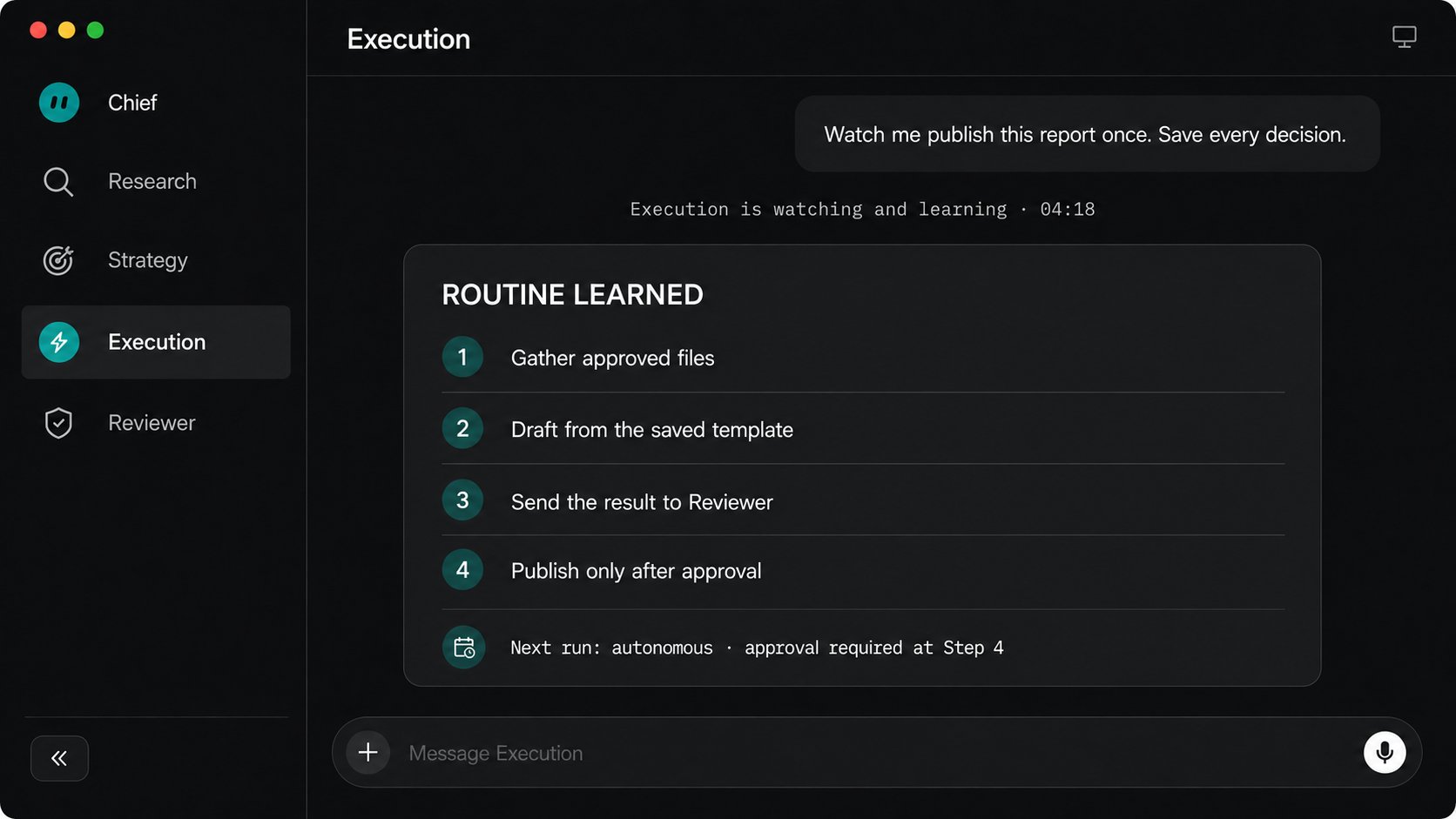
Do not correct only the final output.
If you repair the result but leave the workflow unchanged, the same failure returns tomorrow.
Step 5: Build the Graph and Prove It Works
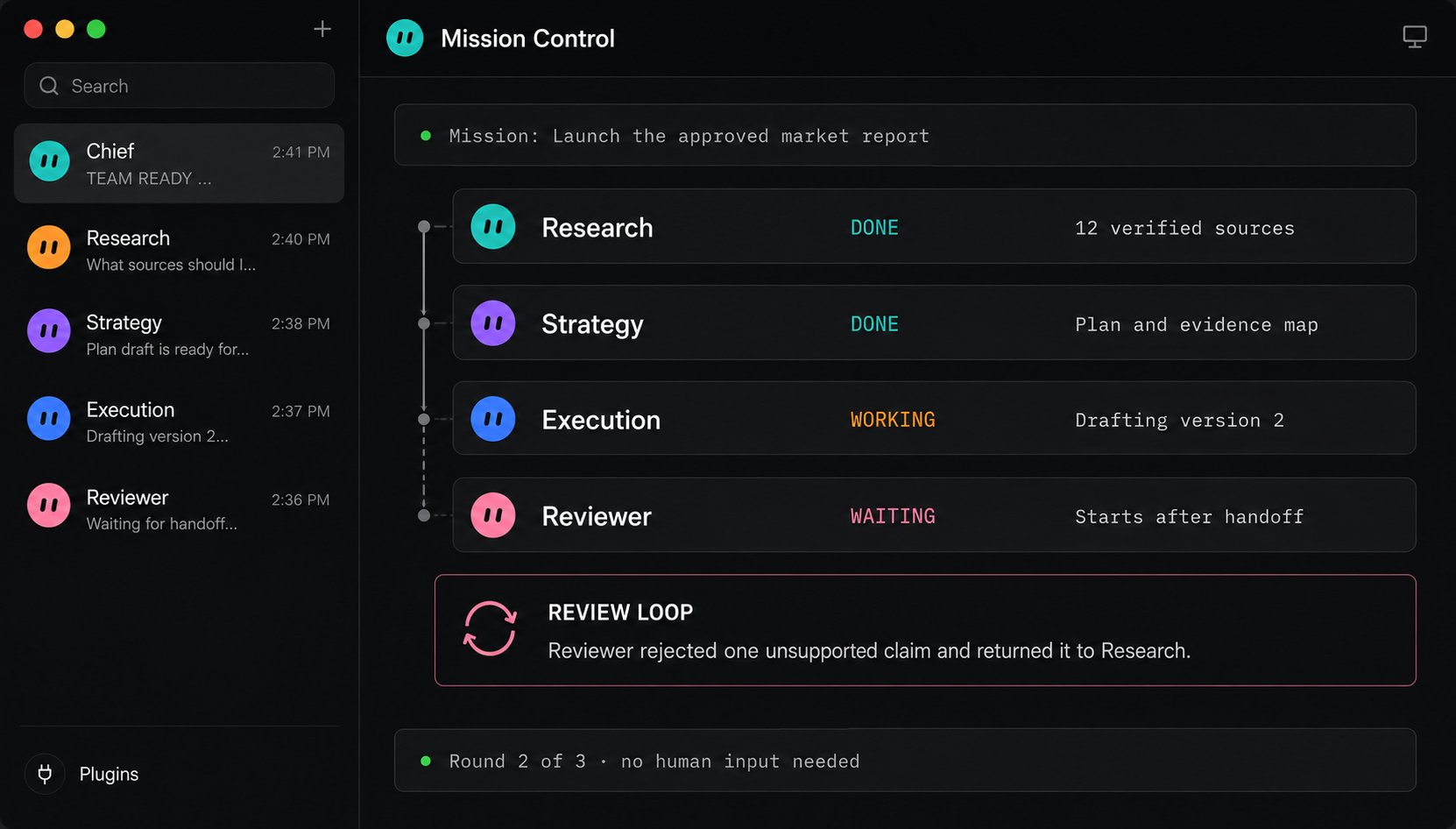
Now connect the agents:
Mission → Chief → Research → Strategy → Execution → Reviewer → Approval
That is the forward path.
But a production system also needs a path backward:
Reviewer → Research or Execution → Reviewer
This is the difference between a chain and a graph.
A chain passes work forward.
A graph can decide where the work must go next.
Give Reviewer this instruction:
Evaluate every deliverable against the Mission Contract.If it fails, identify the exact failed criterion and return it to the specialist capable of fixing it.Include the problem, supporting evidence, required correction and expected output.Do not rewrite the entire deliverable yourself.Recheck the corrected result.Stop after three failed rounds and escalate with a concise failure report.
Reviewer should protect quality.
It should not become another Execution agent.
Otherwise every task reaches Reviewer, Reviewer rewrites everything, and the entire graph develops a new bottleneck.
A useful Reviewer rejects precisely. It does not silently repair everything.
Do not schedule the mission after the first successful result
Run the Three-Run Proof.
Run 1: Observe
Watch the entire system.
Record:
-
Where context was lost
-
Where work was duplicated
-
Which instruction was misunderstood
-
Which approval appeared unexpectedly
-
Which quality check failed
Do not manually repair the final result.
Repair the charter, routine or handoff that created the failure.
Run 2: Correct
Give the team a different but representative mission.
Check whether it avoids the previous failure without receiving a new instruction.
If the same mistake returns, the correction was never added to durable memory.
Run 3: Release
Allow no intervention unless:
-
A Red action is required
-
The Mission Contract is ambiguous
-
The correction loop fails three times
Measure five things:
-
Completion Rate
-
Human Interventions
-
Review Loops
-
Time to Accepted Result
-
Cost per Accepted Result
Never automate the first successful run. Automate three consecutive successful runs.
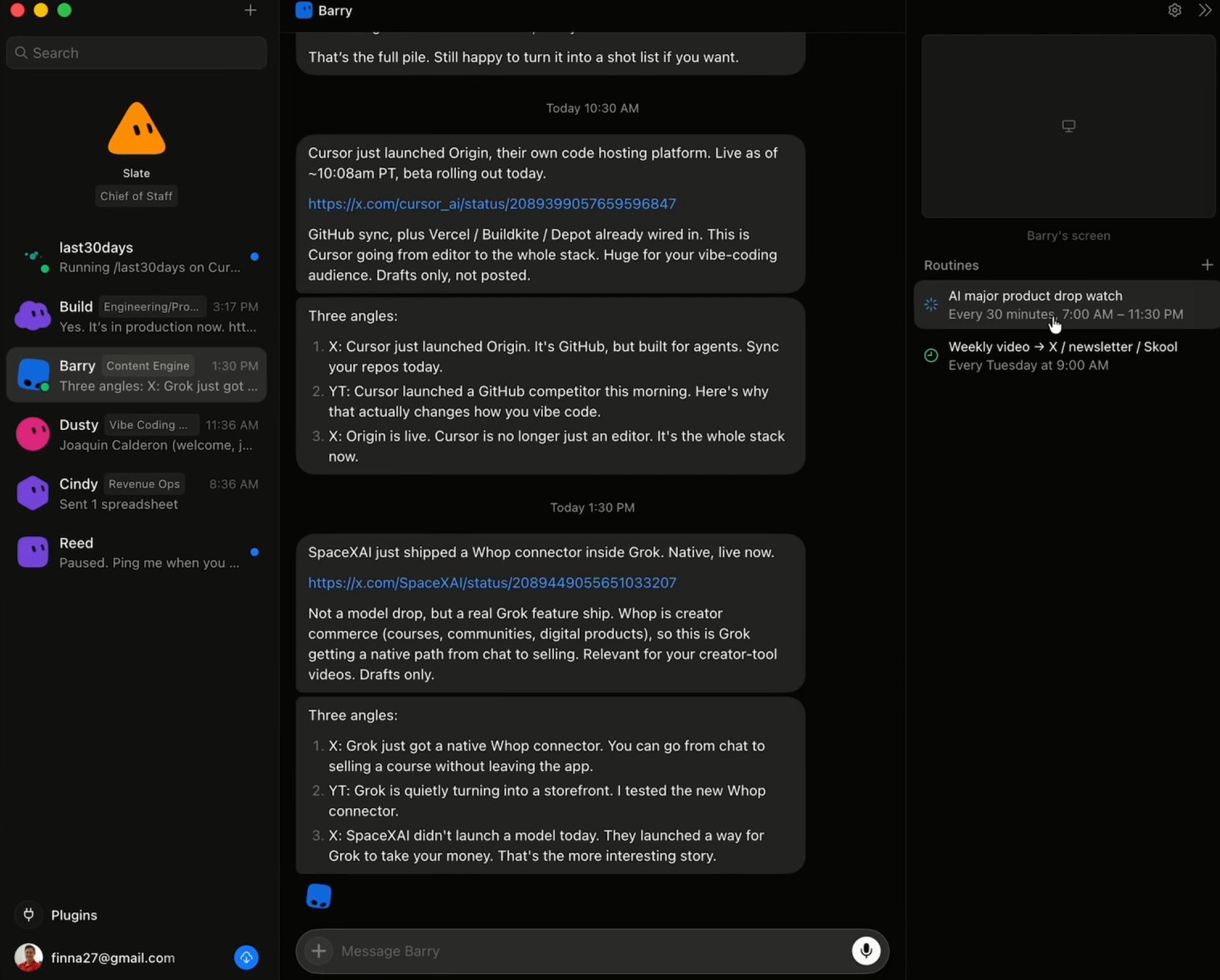
Once it passes, create a schedule or trigger.
Grok Automations supports reusable instructions, connectors, scheduled runs, email triggers and saved run histories.
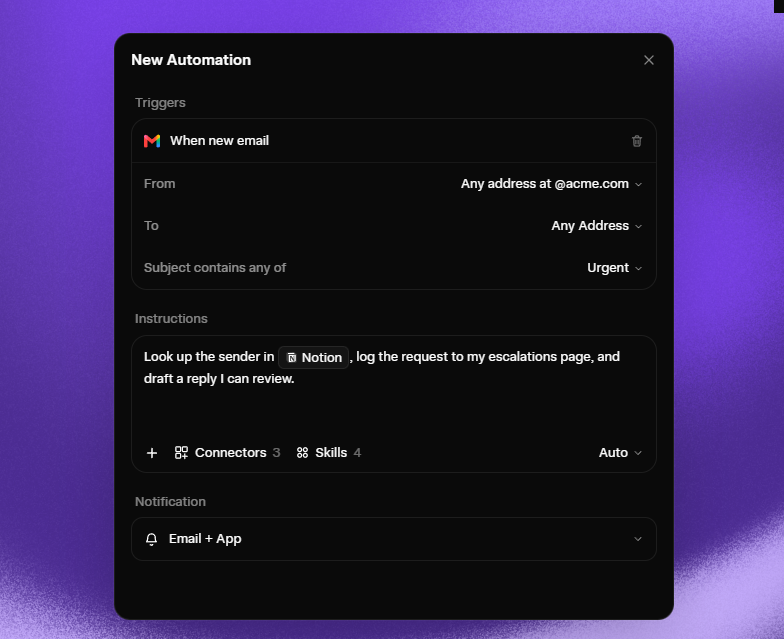
For technical missions, Grok Build’s /goal can continue working until a task is completed and verified.
The Agent Dashboard provides a live view of parallel sessions and highlights agents waiting for input.
But scheduling is not the final step.
The system also needs to improve.
Create one weekly routine:
Review every mission completed this week.Identify repeated corrections, unnecessary handoffs, duplicated work, missing context and decisions the user made more than once.Propose updates to the Agent Charters, shared memory, routines and acceptance criteria.Show every proposed change before applying it.Never change the original Mission Contract without explicit approval.
This creates the compounding loop:
Execute → Review → Correct → Remember → Execute Better
Your Final Architecture
At the end, the system should look like this:
-
You define the mission and approve Red actions.
-
Chief plans, delegates and protects shared context.
-
Research gathers verified evidence.
-
Strategy converts evidence into decisions.
-
Execution creates the artifact.
-
Reviewer rejects anything below the standard.
-
The Graph routes work forward and backward.
-
Memory preserves corrections across future runs.
-
Automations launch approved missions on schedule.
You should not become the human router moving information between five AI chats.
Chief owns routing.
Specialists own execution.
Reviewer owns quality.
You own the outcome.
The goal is not maximum autonomy. The goal is reliable autonomy with controlled authority.
The end:
I think many people are too lazy to create a proper chart once and for all, so that the team of agents can always carry out all tasks accurately.
but Grok Bot can operate the computer, use the tools, preserve context, and coordinate the team - but you still decide the mission, the limits, and the final approval.
Stop asking what one AI can do. Start designing what an entire AI team can own.
That is where the real automation begins!
@0xCodila